

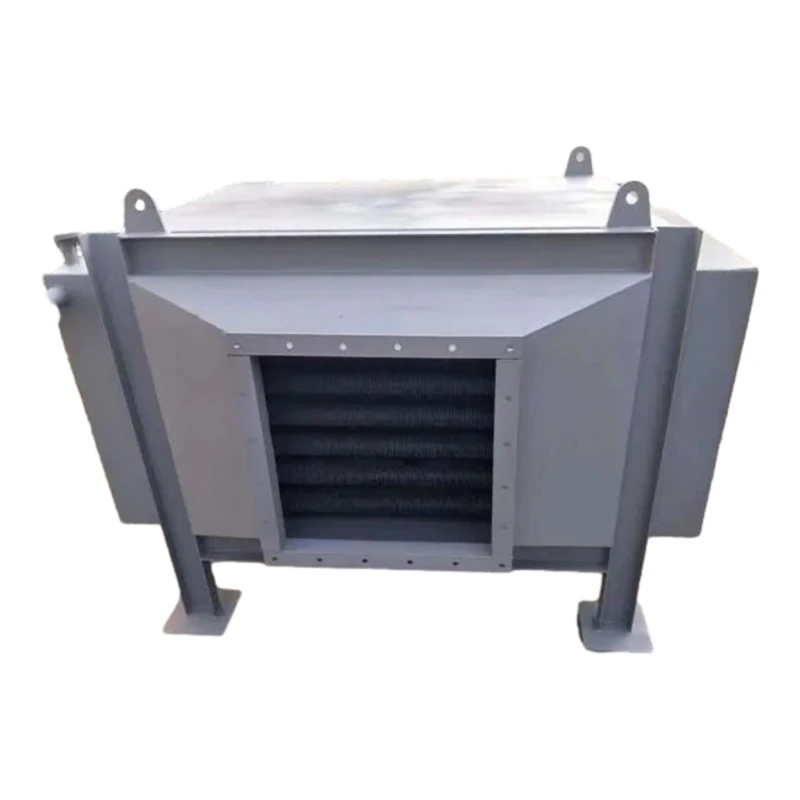
Hey there! As a supplier of Flue Gas Heat Recovery Units, I've seen firsthand the importance of combustion efficiency and its influence on these units. In this blog, I'll break down what exactly combustion efficiency means, how it impacts a Flue Gas Heat Recovery Unit, and why it's crucial for your operations.
Let's start with the basics. Combustion efficiency is all about how well a fuel burns. When you're burning fuel, whether it's natural gas, oil, or coal, you want as much of that fuel to turn into useful heat as possible. A high combustion efficiency means that most of the fuel is being used to generate heat, while a low efficiency means that a significant amount of fuel is being wasted.
So, how does combustion efficiency affect a Flue Gas Heat Recovery Unit? Well, the main job of a Flue Gas Heat Recovery Unit is to capture the heat that would otherwise be lost in the flue gas and use it for other purposes. If the combustion efficiency is high, there's less unburned fuel and more heat energy in the flue gas. This means that the Flue Gas Heat Recovery Unit has more heat to work with, and it can be more effective at recovering that heat.
On the other hand, if the combustion efficiency is low, there's a lot of unburned fuel in the flue gas. This unburned fuel not only represents a waste of resources but can also cause problems for the Flue Gas Heat Recovery Unit. For example, the unburned fuel can deposit on the heat exchanger surfaces, reducing their efficiency and potentially causing damage over time.
Another aspect to consider is the temperature and composition of the flue gas. High combustion efficiency usually results in a flue gas with a higher temperature and a more favorable composition for heat recovery. The higher the temperature of the flue gas, the more heat can be transferred to the heat recovery medium in the Flue Gas Heat Recovery Unit. Additionally, a well-combusted flue gas has a more consistent composition, which makes it easier for the heat recovery unit to operate efficiently.
Now, let's talk about some real - world implications. If you're running an industrial process that relies on a Flue Gas Heat Recovery Unit, a low combustion efficiency can lead to increased operating costs. You're using more fuel than necessary, and at the same time, your heat recovery unit isn't performing as well as it could be. This means you're spending more money on fuel and getting less heat back from the flue gas.
On the flip side, improving combustion efficiency can have a significant positive impact. It can reduce your fuel consumption, which saves you money in the long run. It also allows your Flue Gas Heat Recovery Unit to operate more effectively, increasing the amount of heat you can recover and reuse in your process.
As a supplier, we offer a range of Flue Gas Heat Recovery Units that are designed to work in conjunction with high - combustion - efficiency systems. But we also know that every operation is different, and sometimes, you might be dealing with less - than - ideal combustion conditions. That's why our units are built to be flexible and adaptable.
We also have other related products that can be useful in different waste - heat recovery scenarios. For example, if you're in the mining industry, we have the Mine Exhaust Air Waste Heat Recovery Unit. This unit is specifically designed to recover heat from the exhaust air in mines, which can be a valuable source of energy.
Another great option for the mining sector is the Mining Compressed Air Heat Recovery Unit. Compressed air systems in mines generate a lot of waste heat, and this unit can help you capture and reuse that heat.
The Coal Mine Methane Heat Recovery Device is also worth mentioning. Methane is often produced in coal mines, and this device can recover the heat from the methane, turning it into a useful energy source.
If you're dealing with mine seepage water, our Mine Seepage Water Heat Recovery Unit can be a game - changer. It recovers the heat from the seepage water, which can be used for various heating purposes in the mine.
And last but not least, our Mine Waste Heat Recovery Heat Exchanger is a key component in many waste - heat recovery systems. It efficiently transfers heat from the waste - heat source to the medium that will use the heat, ensuring maximum energy transfer.
In conclusion, combustion efficiency plays a vital role in the performance of a Flue Gas Heat Recovery Unit. By understanding and optimizing combustion efficiency, you can improve the efficiency of your heat recovery unit, reduce your fuel consumption, and save money. If you're interested in learning more about our Flue Gas Heat Recovery Units or any of our other waste - heat recovery products, don't hesitate to reach out. We're here to help you find the best solutions for your energy - recovery needs and get the most out of your operations.
References
- "Combustion Engineering Handbook"
- "Industrial Heat Recovery: Principles and Applications"
- "Waste Heat Recovery Technologies for the Mining Industry"